
Етикет у ХХІ столітті — це не про жорсткі рамки, а про культуру щоденного життя, повагу до себе й до інших та вміння почуватися впевнено в різних соціальних і професійних ситуаціях.
У цій розмові експертка з етикету Оксана Датій ділиться власним досвідом: як родина формує фундамент внутрішньої культури, чому етикет — це «інструкція до життя», які навички є найціннішими для родин, та які цінності вона прагне нести у світ.
Ви часто говорите, що етикет для Вас — це стиль життя, закладений ще в родині. Як приклад Ваших батьків сформував Ваше внутрішнє відчуття культури, поваги до людей і став фундаментом тієї експертності, яку Ви сьогодні передаєте іншим?
Питання цікаве, бо воно відразу розкриває метод, як батькам навчити дітей правилам етикету. Мої батьки навчили мене через гру і спільне читання казок. Кожна маленька дівчинка мріє стати принцесою, і де ж ви бачили принцесу з ложкою, яка не вміє користуватися ножем і виделкою або не поважає людей?! Саме так у легкій ігровій формі батьки навчали мене правил з етикету.
За столом ми створювали власний світ: сервіровання, як на прийомі у короля, або поле битви — де келихи були воїнами, а при чаюванні самовар виступав командуючим. Весело було і повчально. Кожен із батьків прагне, щоб його дитина стала кращою, тому передає їй традиції, цінності і знання.
А якщо філософськи підійти до відповіді на запитання, то з моменту народження дитини особистість формується від статусу батьків, і вже потім окреслюється власний статус (сформований знаннями, з початком трудової діяльності, навколишнім оточенням). Саме батьки навчали мене, що навіть у найменших дрібницях — за столом, у розмові чи під час спільної роботи — проявляється внутрішня культура людини.
У своїй роботі Ви руйнуєте стереотип, що етикет — це про жорсткі рамки й заборони. Як би Ви сформулювали сучасне значення етикету для людини ХХІ століття — у житті, спілкуванні та внутрішньому комфорті?
Давайте почнемо з того, що етикет — це не кодекс і не закон, він нічого не забороняє, а дає тільки можливості. Чим більше у вас інструментів — тим більше можливостей. Етикет допомагає людині почуватися впевнено у будь-якій ситуації.
Я б більше порівняла етикет з інструкцією: «інструкція до життя». Ви коли купуєте, наприклад, пральну машину, ви спочатку читаєте інструкцію, а вже потім покроково натискаєте кнопки для роботи машинки — і саме це створює комфорт.
Так само й з етикетом: знаючи правила, ви не будете вирішувати бізнес-питання до десерту — бо час десерту не настав, і вирішення важливих питань не буде ефективним. Не знаючи, як користуватися серветкою з тканини чи столовим приладдям, людина привертає зайву увагу і втрачає внутрішню впевненість. І так далі.
Тому головний меседж: етикет — це не про обмеження, а про свободу почуватися впевнено у будь-якій ситуації.
Ви навчаєте не лише правилам, а й умінню згладжувати гострі кути, уникати ненавмисних образ і почуватися впевнено в будь-якій ситуації. Які навички етикету, на Вашу думку, сьогодні є найбільш цінними для жінок, дітей і родин загалом?
На мою думку — вміння чути один одного. Не просто слухати, а чути. В родині повинні бути сімейні цінності, що об’єднують. Згадайте дитинство: татко прикрашає ялинку і ви допомагаєте. І так кожного року — це вже традиція вашої родини.
Ви спитаєте: при чому тут правила етикету? Все просто — допомога, створення комфорту собі і іншим. Мама накриває стіл, сервірує його квітами, столовим приладдям. З «величного» буфету дістає красивий посуд — і дитина прагне навчитись робити так само.
Пізніше ці навички ви переносите в своє життя і вже вчите своїх дітей. Це і є гармонія. На курсах і івентах я тільки додаю штрихи до вашого вміння сервірувати, показую, як правильно розмістити все, використовуючи навіть математику. Але основа починається в родині.
Ви — авторка книг про етикет, зокрема «Шпаргалки з етикету», де поєднуєте теорію з реальним життям. Що для Вас було важливо передати читачеві: правила чи відчуття культури, впевненості та внутрішньої гідності?
Так, я мала честь представити на розгляд свої книги з етикету — для дітей та дорослих. «Шпаргалки з етикету» — перша книга з практичними уроками та простими поясненнями правил, яким мене навчили батьки.
Для мене було важливим передати не лише правила з етикету, а передусім відчуття культури, впевненості. Правила важливі, але якщо вони стоять на міцному фундаменті культури.
Для мене етикет починається з родини — формування нашого світогляду. А вже згодом, у дорослому житті, базові цінності доповнюються новими інструментами, які допомагають людині почуватися впевнено в різних ситуаціях.
Ви говорите, що етикет допомагає людині бути по-справжньому щасливою. Як, на Ваш погляд, культура поведінки, повага до себе та до інших змінюють світогляд людини і які цінності Ви прагнете нести через свою діяльність у світ?
На мій погляд, етикет формує внутрішню опору. Коли людина володіє правилами етикету — у її житті стає менше напруги, страху помилитися чи бути незрозумілою. Вона почувається впевненою і спокійною у спілкуванні з будь-якими людьми.
Культура поведінки поступово змінює світогляд: з’являється уважність до деталей, до слів, до почуттів інших. Це не про зовнішню правильність, а про внутрішню гідність.
Мої колеги роблять різні порівняння етикету: одні порівнюють етикет з тортом, інші — із шафою одягу. Теж маю своє порівняння етикету — СВІТЛОФОР. Етикет в нашому житті, як світлофор: у одних людей завжди червоний колір — вони вважають, що їм він не потрібен і не цікавий; інші в стані жовтого кольору — вирішують треба чи не треба, і починають вивчати правила етикету, якщо виникає ситуація і потрібні додаткові інструменти, щоб впоратися. Людина з зеленим кольором світлофора, зі знанням етикету, почувається впевнено в будь-якій ситуації життя.
Через свою діяльність я прагну нести у світ прості, але фундаментальні цінності: повага, тактовність, усвідомленість і культуру щоденного життя.
Oksana Datii: Etiquette as Freedom and Inner Comfort: Family Values, Dignity, and Confidence in Any Situation
Іn the 21st century, etiquette goes far beyond rigid rules and formalities. It is about the culture of everyday life, respect for oneself and others, and the ability to feel confident and comfortable in various social and professional situations.
In this conversation, etiquette expert Oksana Datii shares her personal experience: how family shapes the foundation of inner culture, why etiquette is an “instruction for life,” which skills are most valuable for families today, and which values she strives to bring into the world through her work.
You often say that etiquette for you is a way of life, rooted in your family. How did your parents’ example shape your inner sense of culture and respect for people, and become the foundation of the expertise you now share with others?
This is an interesting question because it immediately reveals a method of how parents can teach children etiquette. My parents taught me through play and reading fairy tales together. Every little girl dreams of becoming a princess — and where have you ever seen a princess holding a spoon who does not know how to use a knife and fork or who does not respect other people?!
That is exactly how, in a light and playful way, my parents taught me the rules of etiquette. At the table, we created our own world: table settings like at a royal reception, or a battlefield where glasses were warriors, and during tea time the samovar acted as the commander-in-chief. It was fun and educational at the same time.
Every parent wants their child to become better, so they pass on traditions, values, and knowledge. And if we approach this question philosophically, from the moment a child is born, their personality is shaped by the parents’ status, and only later does their own status take shape — formed by knowledge, the beginning of professional activity, and the surrounding environment.
My parents taught me that even in the smallest details — at the table, in conversation, or during shared work — a person’s inner culture is revealed.
In your work, you break the stereotype that etiquette is about strict rules and prohibitions. How would you define the modern meaning of etiquette for a person of the 21st century — in life, communication, and inner comfort?
Let’s start with the fact that etiquette is neither a code nor a law. It does not prohibit anything; it only provides opportunities. The more tools you have, the more opportunities open up. Etiquette helps a person feel confident in any situation.
I would rather compare etiquette to an instruction manual — an “instruction for life.” When you buy, for example, a washing machine, you first read the manual and only then press the buttons step by step — and that is what creates comfort.
The same applies to etiquette. Knowing the rules, you will not discuss business matters before dessert — because the time for dessert has not yet come, and addressing important issues at the wrong moment will not be effective. Not knowing how to use a cloth napkin or cutlery draws unnecessary attention and causes a person to lose inner confidence. And so on.
Therefore, my main message is this: etiquette is not about limitations, but about the freedom to feel confident in any situation.
You teach not only rules, but also the ability to smooth sharp edges, avoid unintentional offense, and feel confident in any situation. Which etiquette skills do you consider most valuable today for women, children, and families in general?
In my opinion, the most important skill is the ability to truly hear one another — not just listen, but hear. Families should have shared values that unite them.
Remember childhood: your father decorates the Christmas tree and you help him. Year after year, this becomes a family tradition. You may ask — what does etiquette have to do with this? It is very simple: helping, creating comfort for yourself and others.
A mother sets the table, decorates it with flowers and cutlery, takes beautiful dishes from the “grand” cabinet — and the child wants to learn to do the same. Later, these skills are carried into adult life and passed on to one’s own children. This is harmony.
At courses and events, I only add professional touches to your ability to set a table, showing how to place everything correctly, even using elements of mathematics. But the foundation always begins in the family.
You are the author of books on etiquette, including “Etiquette Cheat Sheets,” where you combine theory with real life. What was more important for you to convey to the reader — rules or a sense of culture, confidence, and inner dignity?
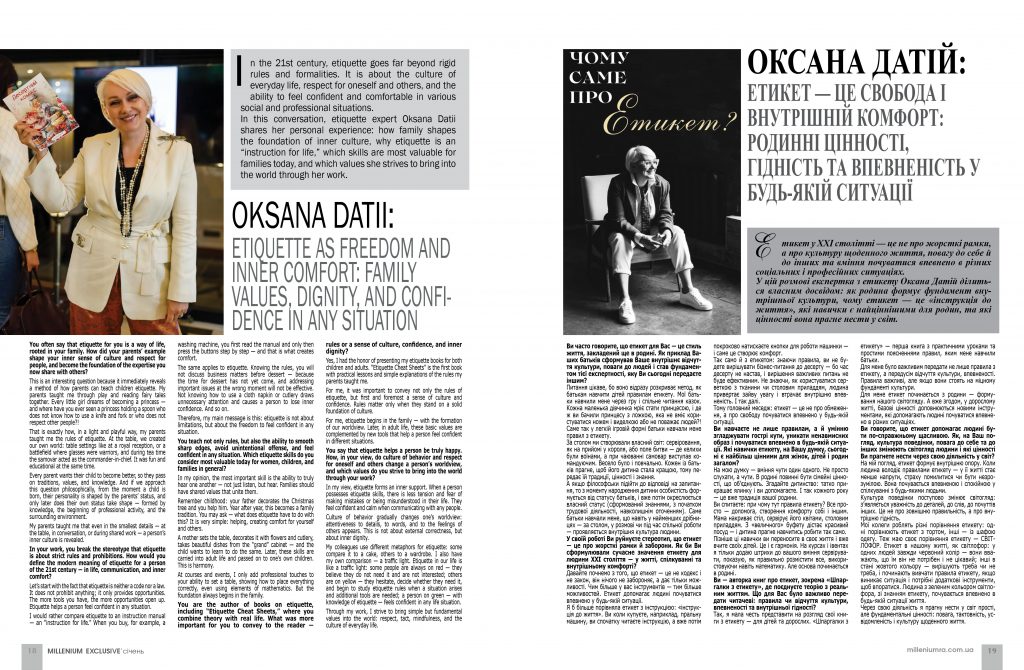
Yes, I had the honor of presenting my etiquette books for both children and adults. “Etiquette Cheat Sheets” is the first book with practical lessons and simple explanations of the rules my parents taught me.
For me, it was important to convey not only the rules of etiquette, but first and foremost a sense of culture and confidence. Rules matter only when they stand on a solid foundation of culture.
For me, etiquette begins in the family — with the formation of our worldview. Later, in adult life, these basic values are complemented by new tools that help a person feel confident in different situations.
You say that etiquette helps a person be truly happy. How, in your view, do culture of behavior and respect for oneself and others change a person’s worldview, and which values do you strive to bring into the world through your work?
In my view, etiquette forms an inner support. When a person possesses etiquette skills, there is less tension and fear of making mistakes or being misunderstood in their life. They feel confident and calm when communicating with any people.
Culture of behavior gradually changes one’s worldview: attentiveness to details, to words, and to the feelings of others appears. This is not about external correctness, but about inner dignity.
My colleagues use different metaphors for etiquette: some compare it to a cake, others to a wardrobe. I also have my own comparison — a traffic light. Etiquette in our life is like a traffic light: some people are always on red — they believe they do not need it and are not interested; others are on yellow — they hesitate, decide whether they need it, and begin to study etiquette rules when a situation arises and additional tools are needed; a person on green — with knowledge of etiquette — feels confident in any life situation.
Through my work, I strive to bring simple but fundamental values into the world: respect, tact, mindfulness, and the culture of everyday life.