У час, коли Україна виборює свободу на всіх рівнях — від політичного до особистого, адвокатура стала не просто правовою інституцією, а й опорою для мільйонів людей. Адвокатка Валентина ГРІШИНА ділиться тим, як змінилася професія під час війни, з якими викликами стикаються юристи та чому європейські стандарти вже стали реальністю українського правничого життя.
— Пані Валентино, як, на Вашу думку, трансформувалася роль адвоката під час війни?
— Війна докорінно змінила не лише державу, а й саму природу адвокатської професії. Ми перестали бути просто представниками в суді — сьогодні адвокат поєднує роль правника, кризового менеджера, медіатора та психолога. Щоденні виклики охоплюють супровід справ військовослужбовців і їхніх родин, захист прав цивільних, а також складні цивільні та спадкові спори, пов’язані з перебуванням українців за кордоном. Люди потребують не лише фаховості, а й відчуття захищеності — і саме адвокат має забезпечувати цю опору.
— З якими питаннями найчастіше звертаються українці, що тимчасово перебувають за кордоном?
— Кількість таких запитів зросла в рази. Це консульські дії, сімейні та спадкові спори, захист прав дітей, отримання соціальних виплат військовослужбовцям та їхнім родинам. Я супроводжую клієнтів на всіх етапах: від аналізу ситуації й збору доказів до комунікації з українськими та іноземними установами. Моє завдання — зробити складні процеси зрозумілими, а права людини — захищеними, незалежно від того, де вона перебуває.
— Як вдається підтримувати психологічну стійкість і дотримуватися етичних стандартів у такі непрості часи?
— Стійкість стала критично важливою рисою адвоката. Мені допомагають дисципліна, планування та постійний професійний розвиток. Але найголовніше — усвідомлення, що за кожною справою стоїть конкретна людська історія. У часи емоційного напруження адвокат повинен залишатися голосом закону та балансу. Чесність, виваженість і повага до клієнта — фундамент професії, який не може похитнути навіть війна.
— Як сьогодні проявляються європейські стандарти в українській адвокатурі?
— Україна впевнено рухається до європейської моделі адвокатури. Зростає роль самоврядування, дисциплінарних органів, професійної незалежності. Принципи верховенства права, конфіденційність, прозорість та якісна правнича допомога вже стали нормою. Адвокат сьогодні — не лише фахівець, а й гарант правової культури та демократичних цінностей.
— Які інновації, на Вашу думку, є найбільш потрібними для юридичної сфери?
— Ключову роль відіграють цифрові інструменти: електронний суд, автоматизований документообіг, онлайн-процедури. Водночас ми потребуємо ще швидших сервісів, уніфікованих реєстрів і захищених каналів комунікації з судами. Технології — це не заміна адвоката, а можливість зосередитися на головному: стратегії та захисті прав
людини.
— Чи стане практика в країнах ЄС важливою складовою розвитку українського адвоката?
— Безумовно. Міжнародна інтеграція — це вже сьогодення. Зростає кількість транскордонних справ, співпраці з європейськими колегами, запитів від українців у ЄС. Знання європейського права та міжнародних процедур робить адвоката значно конкурентнішим. Це не просто професійний розвиток — це формування нової української правової культури, інтегрованої у європейський правовий простір.
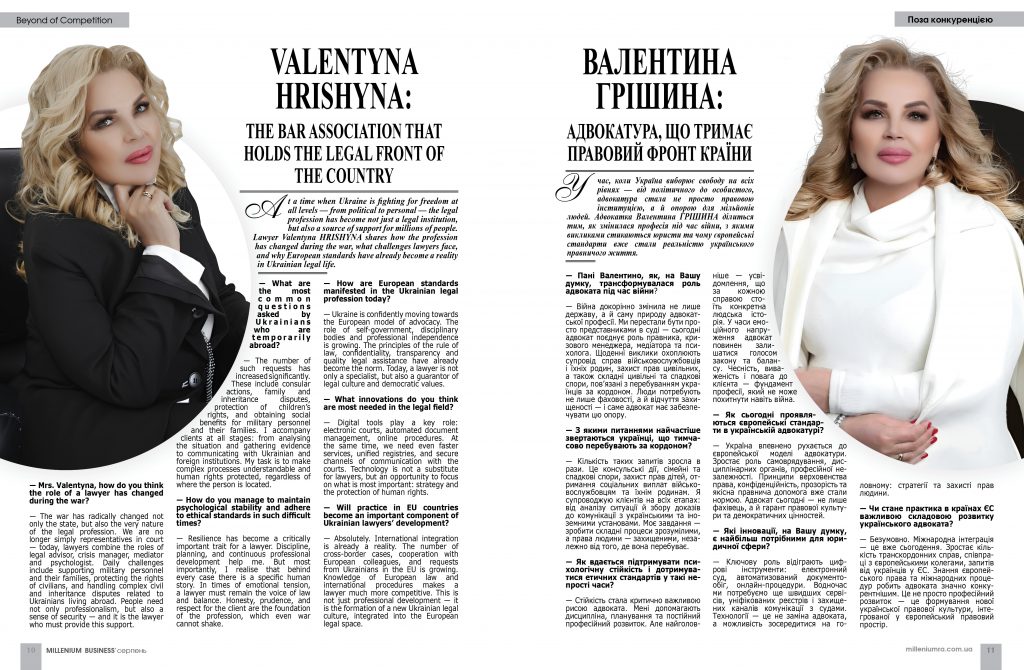
VALENTYNA HRISHYNA:
THE BAR ASSOCIATION THAT HOLDS THE LEGAL FRONT OF THE COUNTRY
Аt a time when Ukraine is fighting for freedom at all levels — from political to personal — the legal profession has become not just a legal institution, but also a source of support for millions of people. Lawyer Valentyna HRISHYNA shares how the profession has changed during the war, what challenges lawyers face, and why European standards have already become a reality in Ukrainian legal life.
— Mrs. Valentyna, how do you think the role of a lawyer has changed during the war?
— The war has radically changed not only the state, but also the very nature of the legal profession. We are no longer simply representatives in court — today, lawyers combine the roles of legal advisor, crisis manager, mediator and psychologist. Daily challenges include supporting military personnel and their families, protecting the rights of civilians, and handling complex civil and inheritance disputes related to Ukrainians living abroad. People need not only professionalism, but also a sense of security — and it is the lawyer who must provide this support.
— What are the most common questions asked by Ukrainians who are temporarily abroad?
— The number of such requests has increased significantly. These include consular actions, family and inheritance disputes, protection of children’s rights, and obtaining social benefits for military personnel and their families. I accompany clients at all stages: from analysing the situation and gathering evidence to communicating with Ukrainian and foreign institutions. My task is to make complex processes understandable and human rights protected, regardless of where the person is located.
— How do you manage to maintain psychological stability and adhere to ethical standards in such difficult times?
— Resilience has become a critically important trait for a lawyer. Discipline, planning, and continuous professional development help me. But most importantly, I realise that behind every case there is a specific human story. In times of emotional tension, a lawyer must remain the voice of law and balance. Honesty, prudence, and respect for the client are the foundation of the profession, which even war cannot shake.
— How are European standards manifested in the Ukrainian legal profession today?
— Ukraine is confidently moving towards the European model of advocacy. The role of self-government, disciplinary bodies and professional independence is growing. The principles of the rule of law, confidentiality, transparency and quality legal assistance have already become the norm. Today, a lawyer is not only a specialist, but also a guarantor of legal culture and democratic values.
— What innovations do you think are most needed in the legal field?
— Digital tools play a key role: electronic courts, automated document management, online procedures. At the same time, we need even faster services, unified registries, and secure channels of communication with the courts. Technology is not a substitute for lawyers, but an opportunity to focus on what is most important: strategy and the protection of human rights.
— Will practice in EU countries become an important component of Ukrainian lawyers’ development?
— Absolutely. International integration is already a reality. The number of cross-border cases, cooperation with European colleagues, and requests from Ukrainians in the EU is growing. Knowledge of European law and international procedures makes a lawyer much more competitive. This is not just professional development — it is the formation of a new Ukrainian legal culture, integrated into the European legal space.