
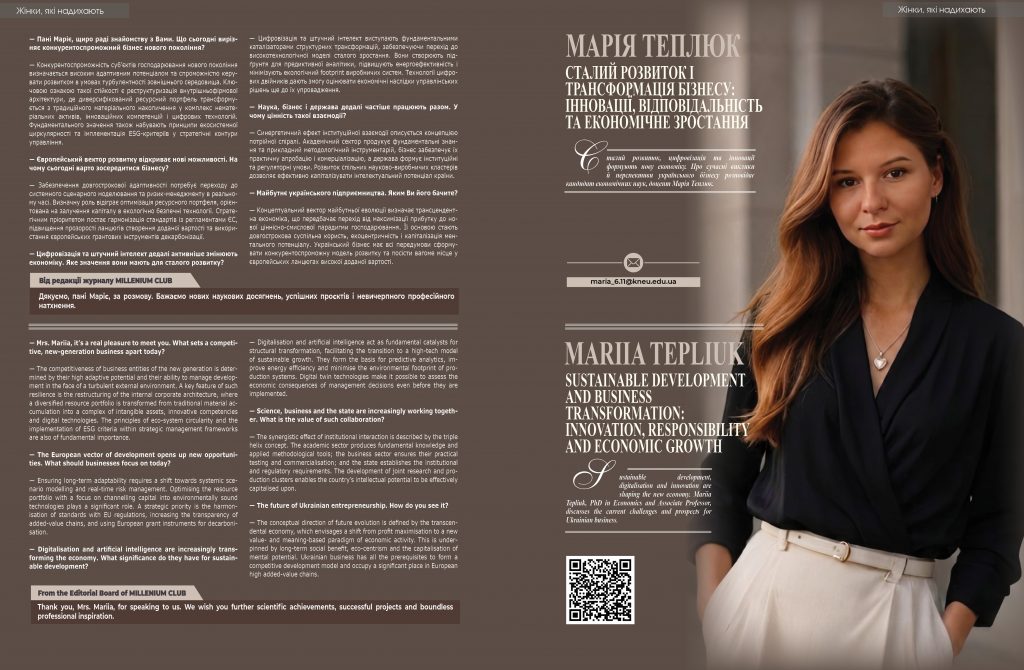
Сталий розвиток, цифровізація та інновації формують нову економіку. Про сучасні виклики й перспективи українського бізнесу розповідає кандидат економічних наук, доцент Марія Теплюк.
— Пані Маріє, щиро раді знайомству з Вами. Що сьогодні вирізняє конкурентоспроможний бізнес нового покоління?
— Конкурентоспроможність суб’єктів господарювання нового покоління визначається високим адаптивним потенціалом та спроможністю керувати розвитком в умовах турбулентності зовнішнього середовища. Ключовою ознакою такої стійкості є реструктуризація внутрішньофірмової архітектури, де диверсифікований ресурсний портфель трансформується з традиційного матеріального накопичення у комплекс нематеріальних активів, інноваційних компетенцій і цифрових технологій. Фундаментального значення також набувають принципи екосистемної циркулярності та імплементація ESG-критеріїв у стратегічні контури управління.
— Європейський вектор розвитку відкриває нові можливості. На чому сьогодні варто зосередитися бізнесу?
— Забезпечення довгострокової адаптивності потребує переходу до системного сценарного моделювання та ризик-менеджменту в реальному часі. Визначну роль відіграє оптимізація ресурсного портфеля, орієнтована на залучення капіталу в екологічно безпечні технології. Стратегічним пріоритетом постає гармонізація стандартів із регламентами ЄС, підвищення прозорості ланцюгів створення доданої вартості та використання європейських грантових інструментів декарбонізації.
— Цифровізація та штучний інтелект дедалі активніше змінюють економіку. Яке значення вони мають для сталого розвитку?
— Цифровізація та штучний інтелект виступають фундаментальними каталізаторами структурних трансформацій, забезпечуючи перехід до високотехнологічної моделі сталого зростання. Вони створюють підґрунтя для предиктивної аналітики, підвищують енергоефективність і мінімізують екологічний footprint виробничих систем. Технології цифрових двійників дають змогу оцінювати економічні наслідки управлінських рішень ще до їх упровадження.
— Наука, бізнес і держава дедалі частіше працюють разом. У чому цінність такої взаємодії?
— Синергетичний ефект інституційної взаємодії описується концепцією потрійної спіралі. Академічний сектор продукує фундаментальні знання та прикладний методологічний інструментарій, бізнес забезпечує їх практичну апробацію і комерціалізацію, а держава формує інституційні та регуляторні умови. Розвиток спільних науково-виробничих кластерів дозволяє ефективно капіталізувати інтелектуальний потенціал країни.
— Майбутнє українського підприємництва. Яким Ви його бачите?
— Концептуальний вектор майбутньої еволюції визначає трансцендентна економіка, що передбачає перехід від максимізації прибутку до нової ціннісно-смислової парадигми господарювання. Її основою стають довгострокова суспільна користь, екоцентричність і капіталізація ментального потенціалу. Український бізнес має всі передумови сформувати конкурентоспроможну модель розвитку та посісти вагоме місце у європейських ланцюгах високої доданої вартості.
Від редакції журналу MILLENIUM CLUB
Дякуємо, пані Маріє, за розмову. Бажаємо нових наукових досягнень, успішних проєктів і невичерпного професійного натхнення.
Mariia Tepliuk. Sustainable Development and Business Transformation: Innovation, Responsibility and Economic Growth
Sustainable development, digitalisation and innovation are shaping the new economy. Mariia Tepliuk, PhD in Economics and Associate Professor, discusses the current challenges and prospects for Ukrainian business.
— Mrs. Mariia, it’s a real pleasure to meet you. What sets a competitive, new-generation business apart today?
— The competitiveness of business entities of the new generation is determined by their high adaptive potential and their ability to manage development in the face of a turbulent external environment. A key feature of such resilience is the restructuring of the internal corporate architecture, where a diversified resource portfolio is transformed from traditional material accumulation into a complex of intangible assets, innovative competencies and digital technologies. The principles of eco-system circularity and the implementation of ESG criteria within strategic management frameworks are also of fundamental importance.
— The European vector of development opens up new opportunities. What should businesses focus on today?
— Ensuring long-term adaptability requires a shift towards systemic scenario modelling and real-time risk management. Optimising the resource portfolio with a focus on channelling capital into environmentally sound technologies plays a significant role. A strategic priority is the harmonisation of standards with EU regulations, increasing the transparency of added-value chains, and using European grant instruments for decarbonisation.
— Digitalisation and artificial intelligence are increasingly transforming the economy. What significance do they have for sustainable development?
— Digitalisation and artificial intelligence act as fundamental catalysts for structural transformation, facilitating the transition to a high-tech model of sustainable growth. They form the basis for predictive analytics, improve energy efficiency and minimise the environmental footprint of production systems. Digital twin technologies make it possible to assess the economic consequences of management decisions even before they are implemented.
— Science, business and the state are increasingly working together. What is the value of such collaboration?
— The synergistic effect of institutional interaction is described by the triple helix concept. The academic sector produces fundamental knowledge and applied methodological tools; the business sector ensures their practical testing and commercialisation; and the state establishes the institutional and regulatory requirements. The development of joint research and production clusters enables the country’s intellectual potential to be effectively capitalised upon.
— The future of Ukrainian entrepreneurship. How do you see it?
— The conceptual direction of future evolution is defined by the transcendental economy, which envisages a shift from profit maximisation to a new value- and meaning-based paradigm of economic activity. This is underpinned by long-term social benefit, eco-centrism and the capitalisation of mental potential. Ukrainian business has all the prerequisites to form a competitive development model and occupy a significant place in European high added-value chains.
From the Editorial Board of MILLENIUM CLUB
Thank you, Mrs. Mariia, for speaking to us. We wish you further scientific achievements, successful projects and boundless professional inspiration.