
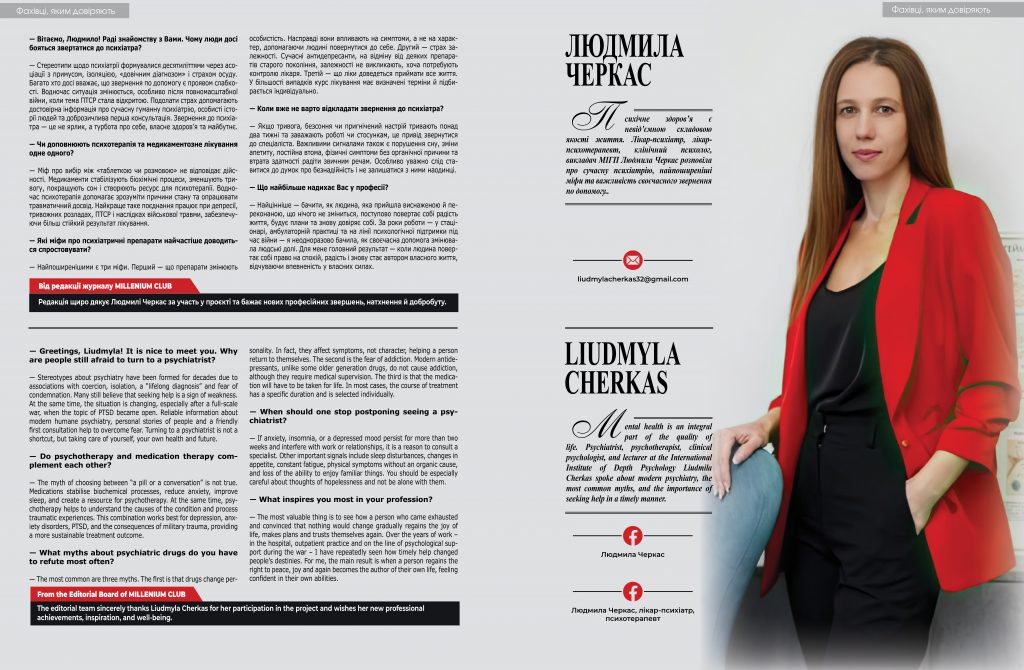
Психічне здоров’я є невід’ємною складовою якості життя. Лікар-психіатр, лікар-психотерапевт, клінічний психолог, викладач МІГП Людмила Черкас розповіла про сучасну психіатрію, найпоширеніші міфи та важливість своєчасного звернення по допомогу.
— Вітаємо, Людмило! Раді знайомству з Вами. Чому люди досі бояться звертатися до психіатра?
— Стереотипи щодо психіатрії формувалися десятиліттями через асоціації з примусом, ізоляцією, «довічним діагнозом» і страхом осуду. Багато хто досі вважає, що звернення по допомогу є проявом слабкості. Водночас ситуація змінюється, особливо після повномасштабної війни, коли тема ПТСР стала відкритою. Подолати страх допомагають достовірна інформація про сучасну гуманну психіатрію, особисті історії людей та доброзичлива перша консультація. Звернення до психіатра — це не ярлик, а турбота про себе, власне здоров’я та майбутнє.
— Чи доповнюють психотерапія та медикаментозне лікування одне одного?
— Міф про вибір між «таблеткою чи розмовою» не відповідає дійсності. Медикаменти стабілізують біохімічні процеси, зменшують тривогу, покращують сон і створюють ресурс для психотерапії. Водночас психотерапія допомагає зрозуміти причини стану та опрацювати травматичний досвід. Найкраще таке поєднання працює при депресії, тривожних розладах, ПТСР і наслідках військової травми, забезпечуючи більш стійкий результат лікування.
— Які міфи про психіатричні препарати найчастіше доводиться спростовувати?
— Найпоширенішими є три міфи. Перший — що препарати змінюють особистість. Насправді вони впливають на симптоми, а не на характер, допомагаючи людині повернутися до себе. Другий — страх залежності. Сучасні антидепресанти, на відміну від деяких препаратів старого покоління, залежності не викликають, хоча потребують контролю лікаря. Третій — що ліки доведеться приймати все життя. У більшості випадків курс лікування має визначені терміни й підбирається індивідуально.
— Коли вже не варто відкладати звернення до психіатра?
— Якщо тривога, безсоння чи пригнічений настрій тривають понад два тижні та заважають роботі чи стосункам, це привід звернутися до спеціаліста. Важливими сигналами також є порушення сну, зміни апетиту, постійна втома, фізичні симптоми без органічної причини та втрата здатності радіти звичним речам. Особливо уважно слід ставитися до думок про безнадійність і не залишатися з ними наодинці.
— Що найбільше надихає Вас у професії?
— Найцінніше — бачити, як людина, яка прийшла виснаженою й переконаною, що нічого не зміниться, поступово повертає собі радість життя, будує плани та знову довіряє собі. За роки роботи — у стаціонарі, амбулаторній практиці та на лінії психологічної підтримки під час війни — я неодноразово бачила, як своєчасна допомога змінювала людські долі. Для мене головний результат — коли людина повертає собі право на спокій, радість і знову стає автором власного життя, відчуваючи впевненість у власних силах.
Від редакції журналу MILLENIUM CLUB. Редакція щиро дякує Людмилі Черкас за участь у проєкті та бажає нових професійних звершень, натхнення й добробуту.
Liudmyla Cherkas
Мental health is an integral part of the quality of life. Psychiatrist, psychotherapist, clinical psychologist, and lecturer at the International Institute of Depth Psychology Liudmila Cherkas spoke about modern psychiatry, the most common myths, and the importance of seeking help in a timely manner.
— Greetings, Liudmyla! It is nice to meet you. Why are people still afraid to turn to a psychiatrist?
— Stereotypes about psychiatry have been formed for decades due to associations with coercion, isolation, a “lifelong diagnosis” and fear of condemnation. Many still believe that seeking help is a sign of weakness. At the same time, the situation is changing, especially after a full-scale war, when the topic of PTSD became open. Reliable information about modern humane psychiatry, personal stories of people and a friendly first consultation help to overcome fear. Turning to a psychiatrist is not a shortcut, but taking care of yourself, your own health and future.
— Do psychotherapy and medication therapy complement each other?
— The myth of choosing between “a pill or a conversation” is not true. Medications stabilise biochemical processes, reduce anxiety, improve sleep, and create a resource for psychotherapy. At the same time, psychotherapy helps to understand the causes of the condition and process traumatic experiences. This combination works best for depression, anxiety disorders, PTSD, and the consequences of military trauma, providing a more sustainable treatment outcome.
— What myths about psychiatric drugs do you have to refute most often?
— The most common are three myths. The first is that drugs change personality. In fact, they affect symptoms, not character, helping a person return to themselves. The second is the fear of addiction. Modern antidepressants, unlike some older generation drugs, do not cause addiction, although they require medical supervision. The third is that the medication will have to be taken for life. In most cases, the course of treatment has a specific duration and is selected individually.
— When should one stop postponing seeing a psychiatrist?
— If anxiety, insomnia, or a depressed mood persist for more than two weeks and interfere with work or relationships, it is a reason to consult a specialist. Other important signals include sleep disturbances, changes in appetite, constant fatigue, physical symptoms without an organic cause, and loss of the ability to enjoy familiar things. You should be especially careful about thoughts of hopelessness and not be alone with them.
— What inspires you most in your profession?
— The most valuable thing is to see how a person who came exhausted and convinced that nothing would change gradually regains the joy of life, makes plans and trusts themselves again. Over the years of work – in the hospital, outpatient practice and on the line of psychological support during the war – I have repeatedly seen how timely help changed people’s destinies. For me, the main result is when a person regains the right to peace, joy and again becomes the author of their own life, feeling confident in their own abilities.
From the Editorial Board of MILLENIUM CLUB. The editorial team sincerely thanks Liudmyla Cherkas for her participation in the project and wishes her new professional achievements, inspiration, and well-being.